Understanding Breast Changes After Weight Loss
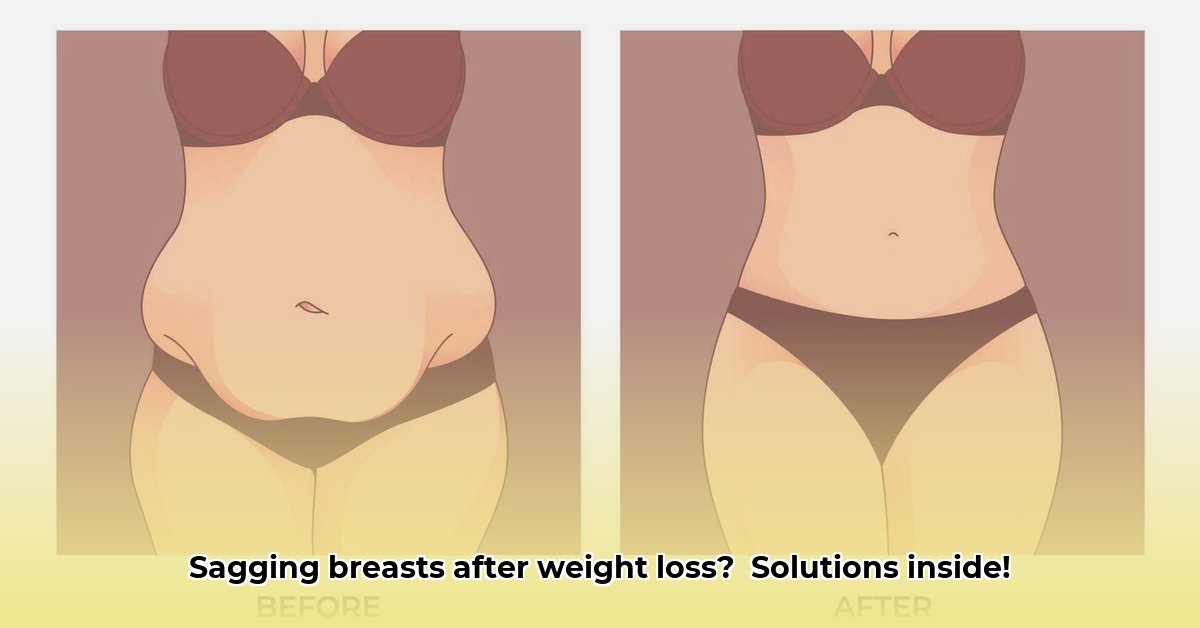
Congratulations on your significant weight loss! This is a remarkable achievement. However, for many women, substantial weight loss results in noticeable changes to their breasts, often leading to decreased volume, sagging (ptosis), and a loss of fullness. This isn't uncommon and understanding why this happens is the first step toward exploring solutions. Why do breasts change shape after significant weight loss? Primarily, it's because breast tissue is largely composed of fat. When you lose weight, your body naturally sheds this fat, including the fat in your breasts, leading to a decrease in size and volume. Furthermore, significant weight loss can stretch the skin around the breasts, reducing its ability to support the breast tissue, resulting in sagging.
Surgical Options for Breast Restoration
Several surgical procedures can effectively address these changes and restore a more desirable breast shape and size. The best option will depend on individual factors, including your desired outcome, age, skin elasticity, and overall health. Let's explore the most common surgical approaches:
Breast Augmentation with Implants
This procedure involves placing either silicone or saline implants (artificial, sterile bags filled with either silicone gel or saline solution) under the breast tissue or muscle to restore or increase breast volume.
Pros: Implants offer predictable results and a variety of implant sizes and shapes are available to tailor the outcome to your individual preferences.
Cons: Surgical incisions are required, increasing the risk of potential complications such as capsular contracture (formation of scar tissue around the implant) or implant rupture (tear in the implant). These risks are thoroughly discussed during the pre-operative consultation.
Breast Augmentation with Fat Grafting (Autologous Fat Transfer)
This technique involves harvesting your own fat from another area of your body (e.g., abdomen, thighs) and injecting it into your breasts to add volume.
Pros: Using your own tissue often produces a more natural-looking result, since there are no foreign materials introduced.
Cons: The amount of volume that can be added is limited by the amount of fat available for harvesting. Furthermore, some of the transferred fat may be reabsorbed by the body over time, meaning the results may not be permanent. Your surgeon can provide a realistic assessment of expected results.
Mastopexy (Breast Lift)
A mastopexy focuses on lifting and reshaping sagging breast tissue to improve their position and overall appearance. It can be performed alone or in combination with breast augmentation.
Pros: Excellent for addressing sagging breasts and improving their shape.
Cons: As with the other surgical approaches, incisions are required, which will result in scarring. It's important to note that a mastopexy does not significantly increase breast size; it primarily focuses on improving the lift and overall shape.
Choosing the Right Procedure: A Personalized Approach
The optimal surgical approach depends on various factors:
Age: Younger skin tends to have greater elasticity, making it more likely to retract well after augmentation. Older patients may require a breast lift alongside augmentation for optimal results.
Skin Elasticity: The degree of skin laxity significantly impacts the most suitable procedure. Extensive sagging may necessitate a more involved procedure that addresses both volume and lift.
Desired Outcome: Your goals will dictate the chosen surgical approach. Do you desire substantial volume increase, or are you primarily seeking to improve the shape and lift of your breasts?
Overall Health: Your overall health plays a significant role in determining your suitability for surgery and can affect recovery time.
Pre-Operative Considerations: Preparing for Surgery
Before undergoing any surgical procedure, a thorough consultation with a board-certified plastic surgeon is absolutely crucial. During this consultation, they will perform a physical examination, discuss the various available options, and assess your individual needs and preferences. It's also essential to have reached a stable weight before surgery. Most surgeons recommend waiting at least six months to a year after significant weight loss to allow your body to fully adjust, ensuring consistent and predictable outcomes. Having realistic expectations, a crucial element of patient satisfaction, will also be discussed during your consultation.
Post-Operative Recovery and Long-Term Care
The recovery process differs based on the chosen procedure. Your surgeon will provide you with detailed post-operative instructions to follow. Expect some degree of pain and discomfort, the management of which is also discussed pre-operatively, and which can typically be alleviated through medication and rest. Regular follow-up appointments are essential to monitor healing and address any potential concerns. Maintaining a healthy lifestyle after surgery is crucial for the longevity of your results.
Insurance Coverage: Navigating the Process
Insurance coverage for breast augmentation is highly variable and often depends on the specific circumstances and the reasoning behind the procedure. While procedures solely focused on cosmetic enhancement are rarely covered, there's an increasing recognition that significant breast ptosis (sagging) that impacts daily activities or self-confidence may be considered a medical issue. Consult your physician and surgeon to determine the best approach to optimizing your insurance coverage, highlighting any functional aspects that might justify coverage.
Dr. Evelyn Reed, MD, FACS, Board-Certified Plastic Surgeon at [Hospital Name], emphasizes the importance of open communication with both your surgeon and insurance provider to understand pre-authorization requirements, coverage limitations, and potential out-of-pocket costs.
This article provides general information and should not replace a consultation with a qualified plastic surgeon. The decision to undergo breast augmentation is a highly personal one, and finding a surgeon you trust is essential for a successful and satisfying experience. Remember that the process and your comfort level are as important as the final outcome.